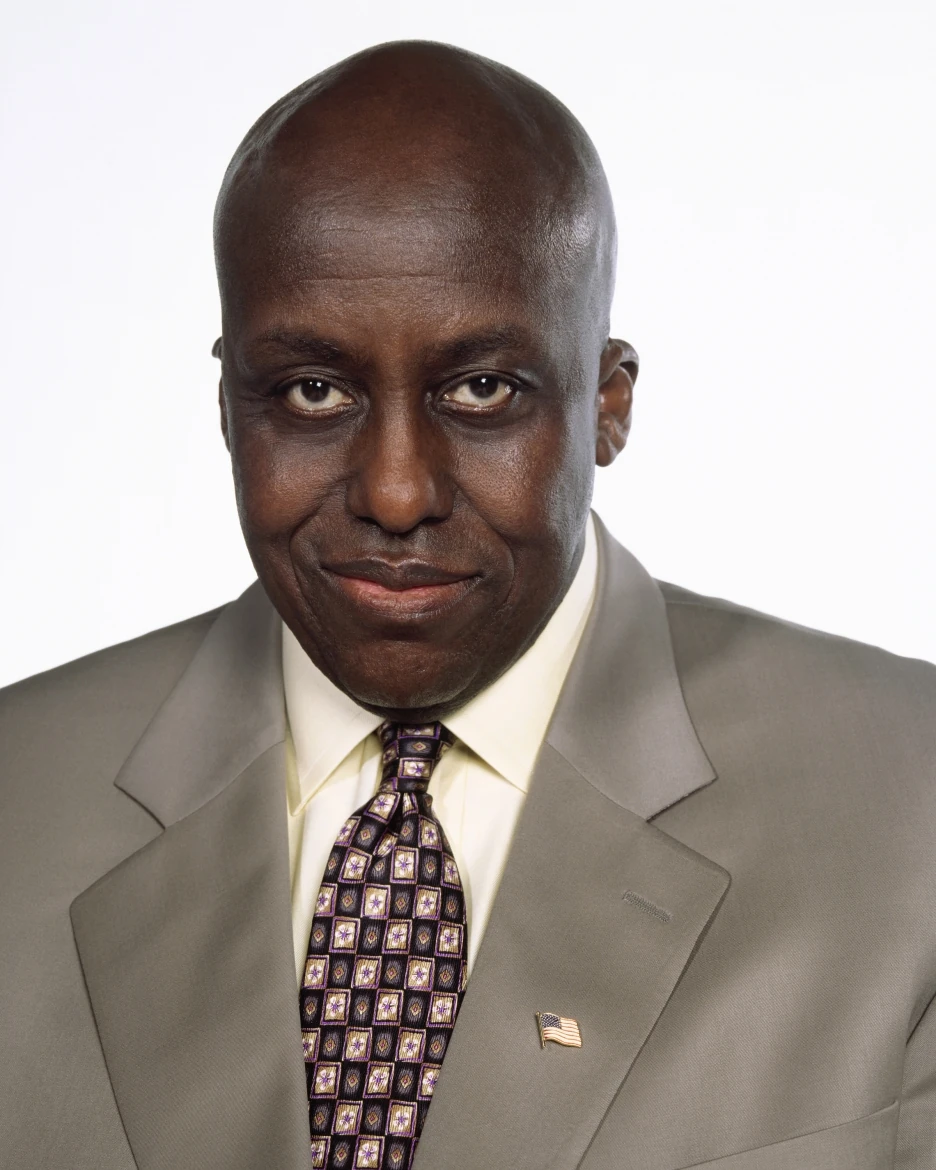
I spoke via Skype with my brother Sean and his fiancé Jeff last night. They're knee-deep in wedding preparations, and as Sean said, it's been crunch time for a while. They seem to be soldiering along pretty well, though; no freak-outs yet—not this early in the game. (The wedding is on October 17—almost exactly two months from now.)
We talked primarily about the order of events for the wedding ceremony. Sean and Jeff have already done their homework, and they designed a program that's roughly modeled on a typical church liturgy. It marks out when the guests are seated, when the procession happens, when certain ceremonial words are read, etc. They did a thorough job; I was impressed. We talked a bit about what readings the couple wanted—maybe something from Hyeon Gak sunim, something from Khalil Gibran, etc. The vibe that Jeff and Sean are looking for is something between interfaith (i.e., explicitly mentioning the wisdom of different specific traditions) and nondenominational (i.e., more toward a non-specific, almost Unitarian-style delivery—not just "nondenominational Christian").
I was happy to announce to my brother and soon-to-be brother-in-law that I am now an ordained minister in the AMM (American Marriage Ministries) tradition. Ordination was as easy as filling some online blanks and clicking a button or two. Feels weird, all the same: in the US, I can now legally officiate marriages, baptisms, and funerals. The weirdness obviously comes from the fact that I did nothing to earn this: it's a bit like going online and automatically receiving inkga (certification of enlightenment) from a Buddhist website.
Sean said that he wanted humor to be part of the ceremony. I joked that I was planning to step up to the altar, do a double-take, and shout, "No one told me it would be two dudes!" I might still do that. We'll see. Jeff thought that'd be a hoot.
There are a few more things for me to square away, legally, before I'm ready to travel to the States in October. I have to register in West Virginia as an ordained minister authorized to perform weddings, and I have to be licensed as a minister. It's not enough merely to be ordained. West Virginia has a website that offers a package to prospective wedding officiants; the package guides one step-by-step through the process of ordination, licensing, and registration. I've ordered that package; it's on its way. And if I understand correctly, licensing and registration (I feel as though I'm talking about a car) happen pretty much simultaneously. After all that, there's one final matter: the marriage license, and I'm not entirely clear about who's supposed to take care of what, but it's just a matter of reading further.
Sean and Jeff offered to pay half my plane fare to the States and back, but I told them I was expecting a windfall in September, so there'd be no need. They're already investing so much money in this event that I think it's best if they save their cash for more important transactions. So it's all coming together; I'm prepping on my end, and they're prepping on their end. They've got the harder job, by far.
In the meantime, yeah. I'm a minister now. Go figure.
_
Sunday, August 16, 2015
by the power vested in me through the Internet...
metaphor
Go ahead. Caption this.

My attempts:
1. "Oh, hi! Yeah, sorry about this, but you walked away without saying whether you were planning to vote for me."
2. "So! What's for dinner?"
3. "SURPRISE, Bill! You keep talking about how boring things are in the bedroom, but you should know that this old white girl still has some tricks up her sleeve!"
4. "Boo! And I just wanted to congratulate you on some truly enormous hemorrhoi—wait—where are you going?"
5. "God, this cold water is a relief after being in your ass for five hours!"
6. "Happy Biiirrrrrrthday to you..."
7. "Uhuuuuuu—did somebody say pizza?"
8. "Yyyerp! That was me gnawin' on yer ball sac! Tee hee!"
9. "Oh, Arthur! Did you catch the sword I threw at you? Arthur? ARTHUR??"
10. "I—have—never—felt—more—alive!"
_
Saturday, August 15, 2015
yo, party people!
Ho there, Korea! Here's what a pizza really ought to cost:

I know it's Liberation Day and all, but get a load of what a pizza costs at a Domino's on Richmond Highway, northern Virginia, just up the street from where I used to live. None of this "W15,000 for a medium" bullshit. The price on the flyer, translated into Korean won, comes out almost exactly to W7,100. That's the proper cost for a large pizza.
Speaking of Liberation Day: one of my students in Ulsan asked, "I normally say that August 15 is Independence Day, but I've heard some people call it Liberation Day. Why do they say that?" I was a bit stumped myself. There's overlap, but there are also some nuanced differences between the concepts of liberation and independence. Liberation, on a national scale, doesn't automatically imply sovereign independence, for example: a people can be liberated from slavery, but find themselves within the context of a larger political system to which they must submit. There's also, somewhere in the shadows, the potential implication that "liberation" doesn't mean "self-liberation," i.e., one is liberated through the efforts of others (Hindus and Buddhists, with their philosophical view of what liberation means, might disagree). That said, a nation can be liberated, then the liberators can step back, more or less, and let the liberated citizens govern their own country as they see fit—independently.
Where does Korea, especially South Korea, fall in all this, given the confusing semantic tangle described above? I didn't have the heart to remind my student that Korea didn't liberate itself: Korea's liberation was but one effect of many that arose from the aftermath of World War 2 and the defeat by the Allies of the Empire of Japan. I don't know what sort of mythology modern Koreans engage in, these days, when they talk about liberation and the horrible Japanese occupation, but given the nature of the speeches normally given on this day—most of which don't thank America and the Allies for what they did—I'm guessing that Koreans want to convince themselves that they did indeed liberate themselves. Unfortunately, that's not the truth. Even a nation as vast and strong as China found itself at least partly under the Japanese boot in the 1930s and 40s. China lies to itself, saying the Japanese had already surrendered to Chinese forces even before the atomic bombs were dropped.* What garbage. Japan, too, is busy rewriting its own history, downplaying its role as an aggressor during World War 2, and trying to play itself up as a victim. This is why Koreans don't trust Japanese apologies: the consistent efforts by the Japanese (e.g., the textbook-publishing industry) to reinterpret history in a false manner.
But rewriting and interpretation are, perhaps, acts in which we all engage to a greater or lesser degree.** "History is written by the victors," the saying goes, but when the losers still exist and can concoct their own narratives, the battle for which narrative is the truest one is joined.
It's a massive, complicated question—one that makes my head hurt at times. I, of course, have my biases, but if I'm going to be honest, I must acknowledge that they are just that—biases. (And obviously, if I say I have biases, I'm not engaging in relativism. Admitting I have biases doesn't make me less biased.)
That said, Happy Liberation Day. And, hey, Korea: you're welcome.
*See "Iron and Silk," starring Mark Salzman, for one version of this myth.
**Cf. Iraqi outrage at the events portrayed in "American Sniper," a film I enjoyed but which apparently enraged many Iraqis who thought their country, their culture, and the wartime events within their borders had been depicted falsely and unfairly.
_
my trip to Ulsan
When KMA, my #3 employer, says "Jump," I say, "How high?" I go where they send me, and if they tell me I have to go to Ulsan—a city I've never visited before—then off I go to Ulsan, no questions asked. My KMA boss had asked me to teach my Persuasive Business Writing course on site instead of doing what we usually do, i.e., teach our courses at our headquarters in Yeouido, central Seoul. KMA is an extremely organized company,* so I'd learned about this latest gig a couple of months ago. I was told that I'd be teaching my 7-hour course, but that the course would be divided over two days—3.5 hours per day. My boss, who's a very nice guy, did all the arranging: he purchased my train ticket, reserved my hotel, and communicated with the on-site coordinator at Korea EWP (한국동서발전—hanguk dongseo baljeon: Korea East-West Power Company). I would have to pay for the hotel and taxi fare, but KMA would pick up the tab once I presented all my receipts. All I had to do was prep my lesson, dress properly, hop on an express train, reach the site, settle in, and teach.
Here's a shot of the KTX train I took from Seoul down to Ulsan. One of the cool things about leaving Seoul on the KTX is that, if you get to the train early enough, it's usually empty. I got to my train about 30-40 minutes before departure, hence the empty car:

Below, a shot of yours truly, settling in for the two-hour ride down south.

Next, a slightly more candid shot. When I uploaded this to Instagram, I wrote something like, "You don't wanna be inside my head." Well, it's kinda true.

The trip plunged us passengers into bad weather. Conditions had been decent in Seoul, but the farther south we went, the more it pissed down rain. The weather was positively English—overcast and drenched—by the time we arrived in Ulsan. Luckily, there was a covered walkway outside of Ulsan Station, so I was able to walk to the taxi stand without having to use my umbrella. The ride from Ulsan Station to EWP was much longer than I expected (about 20 minutes), and I ended up paying almost W18,000—to be reimbursed, of course.
The EWP building was large and imposing: it felt more like a fortress or edifice or ziggurat than a simple building. Its interior was spare and clean; this was obviously a new place. I walked up to the receptionist's desk—the lady seemed kind of lonely, sitting there in the midst of all that vastness—and told her I had come to teach a class and to speak with Ms. Jeong, the coordinator assigned to help get me settled in. I was told to wait a few minutes; Ms. Jeong came down, bright and perky and speaking English quite competently, and she helped me arrange a guest pass, which I got in exchange for handing over a business card (good thing I had one!). Ms. Jeong then led me up to the second floor, through several layers of security and past dozens of CCTV cameras, to the room I'd be using for the workshop.

While waiting in the lobby, I took the following pic of EWP's slightly Konglishy motto: "We make energy for happiness." Grammatically, there's no problem with that sentence at all, but culturally, it sounds strange to a Westerner. "Happiness" doesn't seem like a serious enough concept to slap on a wall and represent the ambitions of a large, powerful corporation. Something like "Powering the future" might have been better. Then again, Aristotle, in his Nicomachean Ethics, noted that happiness is the highest human good—that state of being in which we participate for no sake other than itself. Everything else that we do in life, we do to attain happiness, Aristotle contended. It sits at the top of the hierarchy of human motivation... so perhaps, in that philosophical sense, EWP's motto is perfectly appropriate.

Here's a look at my classroom—very clean, very neat, very nicely teched out, even though my workshop wasn't designed to use any tech other than good old pen and paper. (It's a very basic, very meat-and-potatoes course that I teach.)
The only drawback with the room was the near-total lack of air conditioning. This became a problem for me over both days that I taught: I sweated my way through seven hours of course material, incessantly wiping my face with three different cloths: a paper towel and two handkerchiefs. Normally, I prefer the room temperature to be down around 22ºC (72ºF), but I think this room was at around 26ºC (about 79ºF). It was hot. I'm half-Korean, and Koreans don't sweat easily, but I failed to inherit the no-sweat DNA. I also found it ironic that a power company didn't use its abundant electricity to crank up the air conditioner. When I mentioned this jokingly to a student the following day, she laughed, "Yes; we say that EWP is the only company to tell people not to use its product!"

The first day of class went fairly well. There had been 20 people on the roll, but only 19 people showed up (including the helpful coordinator, Ms. Jeong, who also sat for the class after working so hard to prepare the room and to help me out). Class ended with applause, which I normally take to be a good sign.
Ms. Jeong very kindly called for a cab to take me to my hotel. The ride from EWP to the hotel went more quickly than the ride from the train station to the company; I noted that the hotel seemed to be in a fairly downtown-ish area. It was called the Ulsan Hotel—a name so generic that I had to wonder whether that was its actual name. It occurred to me that I might have misunderstood: maybe I was being taken to "an Ulsan hotel" and not "the Ulsan Hotel." But no: the hotel really was named Ulsan Hotel. The cabbie dropped me off after laughingly giving me shit for having lived ten years in Korea without ever having visited Ulsan before. I lumbered into the lobby, paid for my room in advance, and made my way to Room 706.
Here are three exterior shots of my hotel as I pan ever upward:

Sorry for the lack of focus in these shots; it was dark and rainy—not optimal lighting conditions for a finicky digital camera.


Here's the hallway which, luckily, wasn't all red-lit:

After I'd settled in and hooked up to the hotel's free (but slow) WiFi, I decided to head out for dinner. The hotel sat next to a rotary, in the center of which was some sort of monument. I never got a close look at it, so I don't know what it commemorated, but that's homework for my next visit to Ulsan, whenever that might be. The monument shot:

Dinner was at a local donggaseu place. The menu offered wang-donggaseu (king-sized panko-fried pork cutlet), but the pork that came out wasn't king-sized at all. Still, it was uncommonly tasty: it's easy to do donggaseu badly, and this place did it well. I probably should have ordered two plates, though.
I went back to my room, and even though I was tired after a long train ride followed by several hours of workshop activities, I still had to tutor my student, Amy, who would be contacting me via Skype. (I've written about Amy and her brother Sam here.) She's in the US, so we'd agreed to have our sessions at 10PM, Korea time, which would be 9AM, US east coast time.
The slow WiFi connection meant that our Skype talk was broken up by multiple interruptions. We ended up using Kakao Talk's voice-call function to complete the hour; I've been helping Amy prep her college-admissions essays, so we've been going through all the brainstorming, outlining, drafting, and so on. Her parents had kindly paid for ten 1-hour sessions; Amy's a really good student, and she's applying to a wide range of colleges, including one Ivy League university. I'm sure she'll get in somewhere; I hope she makes it into her dream school, which is Johns Hopkins University in Maryland.
Exhausted after tutoring, I still had one more chore: I needed to wash my clothes so that I wouldn't stink the following day. I had brought along some detergent powder, so I laboriously hand-washed all my clothing in the hotel's bathroom sink. I had told the lobby receptionist that I needed a fan for quick-drying purposes; she took me to the fourth floor, where we picked up a large electric fan. After washing my clothes and torquing them to squeeze out as much water as possible, I hung them up to dry, arranging and rearranging them in such a way as to get the maximum drying effect from the fan.
Despite the fact that this was a much higher-class hotel than the yeogwans I usually use, I noted with amusement that my room had that same naughty red mood lighting for when it's sexy time. I've already blogged about this, though, so I won't repeat myself here.
I went to sleep a bit after 3AM. My clothes were nice and dry when I woke up, late, around 10AM, and hastily prepared to check out. After packing everything up and checking to make sure I hadn't missed anything, I heaved the tall, heavy electric fan back down to the fourth floor, then went down to the first floor to check out. Checkout was as simple as handing over my room key and saying goodbye. I walked out to the street and grabbed a cab to go to EWP.
Ms. Jeong once again met me in the huge building's (stronghold's) lobby. She had already prepped the classroom for the Day Two session, so there was little for me to do but start sweating again. We ate a small lunch together in the first-floor snack bar and talked a bit about ourselves; Ms. Jeong, it turns out, spent six months in Spain and speaks Spanish quite well. I teased her in class by spouting what little Spanish I knew.
Somewhat disappointingly, only about half the students came back for the second day (an early start on vacation?), and the numbers fluctuated wildly throughout the 3.5-hour workshop: we had eight people, then twelve (after a few Day One students came back an hour or so late), then eight again, then six, then eight when some stragglers who had never shown up on Day One suddenly appeared for Day Two. It was an attendance nightmare, and I don't know how much the inconstant students benefited from the course, but by the end of Day Two, there was applause again, and some students said the course had been very helpful. One student even said it had been "an honor" to learn from me; I smiled, sweat dripping down my face, and told him it had been an honor for me as well.
Although the attendance issue was a bit frustrating, I suppose there's little I can do about it: these aren't young high-schoolers or college kids; these are busy, responsible adults who are always on call, which is why they were constantly darting out of the classroom whenever their phones vibrated for attention. I'm not sure, but I might institute a no-phones policy from now on, just to cut down on all the distractions. And based on the sudden drop in student numbers from Day One to Day Two, I might recommend to my boss that, if we ever do on-site training again, we should make sure it's all done on a single day for shorter classes like mine.
Below is a shot of the electronic panel outside our classroom, which shows the room name, the course name (somewhat cut off), the student demographic, the coordinator's name, and the time during which the room had been reserved. Like KMA, EWP strikes me as a very organized, very professional place. With all of the in-building security systems, I can see why it might be important to know how long an event might take: if you come too late, the doors will probably be locked!

And at long last, a picture of Ms. Jeong herself. She was gracious enough to permit me to take this pic and upload it to my blog:

Ms. Jeong deserves a medal for all her hard work.
This next shot is clickable: click to enlarge. It's a shot of my Day Two students, who were all kind enough to give their permission for me to upload their images to my blog. I see eleven students in this picture... the twelfth had probably already wandered off. Some of the students disappeared mysteriously, without a goodbye, and never came back. This was both sad and amusing at the same time.

The students often asked interesting questions or made interesting comments. One lady noted that many of the English errors we were examining were minor in nature—did it really matter that much that we correct them? I replied that, yes, the errors were generally minor, but even tiny errors can leap out for a native speaker, and a series of such errors just compounds the problem and gives the reader an impression of incompetence. To illustrate my point, I wrote "안뇽하세요?" on the board—a misspelling of the standard "Hello" in Korean (annyeong-haseyo? roughly translates as something like, "Do you do peaceably?"—obviously, "Hello" is a much better translation, but if you're a non-Korean-speaker, you might be wondering how it is that "Hello," which is declarative in English, is rendered as a question in Korean). The whole class immediately reacted to the misspelling, even though all I had changed was a single vowel, and that's the point I drove home to my student: the small stuff does indeed matter.
One of the older gentlemen in the class, a man who occupied a rather high position in the company, seemed to light up on Day One after we had gone through my unit on logical fallacies (my course is based on Aristotle's notion of rhetoric which, for Aristotle, contains three elements: ethos, pathos, and logos, i.e., authoritativeness, emotional force, and logic; it was during the logos section that we reviewed ten common fallacies)... but for him, the important thing wasn't to avoid committing the fallacies, but to learn how to keep an opponent off-balance by using the fallacies as a weapon to distract and confuse. Not exactly the lesson I'd hoped he would take from my course material, but I had to laugh. The same gentleman also excitedly parsed some recent speeches by Korean politicians, using the fallacies he'd just learned about to note that those speeches contained a fair amount of bullshit. I'd say that's true for most politicians, be they American, Korean, or whoever.
Anyway, the course is done. This was either KMA's first attempt at teaching an on-site workshop, or it was among the first attempts. I was, essentially, an ambassador for KMA; how well or poorly I was received by EWP's workers would reflect on KMA as a company and would determine whether KMA did more such on-site classes. Overall, I'd say the experience was positive. I thoroughly enjoyed my students, who were all marvelous—yes, even the ones who eventually disappeared, or who were constantly distracted by their cell phones. If EWP ever invites me back to teach another course for them, I'll be more than happy to do so. I had a great time in Ulsan, and it's sad that my time was so brief.
The course finished at 5PM on Day Two; I cabbed back to Ulsan Station and hopped onto the 6:22PM KTX bullet train back to Seoul. The trip took longer going north than it had going south; we didn't get back until a little after 8:30PM. I ate at the Seoul Station Burger King, then made my way to Gwanghwamun to take the bus back to Goyang City. By the time I got off the bus, it was after 11PM, and I was once again dead tired.
Here's a (clickable) shot of a huge, electronic Korean flag, which was on display on the building directly across the street from the front of Seoul Station. This August 15 is gwangbok-jeol, or Liberation Day (alternatively known as Independence Day). It's special because, this year, Korea celebrates its 70th year of freedom from Japanese tyranny.

Ulsan is a major port city, like Pohang and Busan. I didn't get to see much of the city during this trip, but I'm intrigued enough to want to come again. And if the EWP staffers I'd met during my course were any indication, then I came away with a good impression of the people of Ulsan as well. I'm sure I'll be back down here someday.
*I cannot emphasize enough how much I love working for KMA. It's a very professional organization that, I think, is one of the rare places that pays people what they're worth (so take that, Karl Marx, you fucking asshole). KMA lays out its teaching calendar at the beginning of every calendar year, so I know almost all of my teaching dates well in advance. True: this Ulsan gig wasn't on the original calendar, but KMA had told me about the gig back in May or June, so I had plenty of time to mentally prepare. I hate working for a disorganized, unprofessional, zigzaggy company that doesn't seem to know where it's heading. KMA is easily the best gig I've ever done on a steady basis. It's reliable, and it pays reliably, too—no foot-dragging, no indefinite answers when it comes to pay dates, etc.
_
Friday, August 14, 2015
retrograde
Some frustration with USCIS: I've been faithfully tracking my FOIA request's progress up the queue. On August 11, we hit a snag. Here's the timeline:
7/20/15: 1346 of 1645
7/22/15: 1344 of 1669
7/24/15: 1266 of 1678
7/29/15: 1050 of 1764
7/31/15: 858 of 1665
8/3/15: 625 of 1547
8/6/15: 615 of 1620
8/7/15: 575 of 1641
8/9/15: 139 of 273
8/11/15: 154 of 264
8/14/15: 169 of 417
As you see, beginning August 11, I started moving down the queue instead of up the queue. I'm so close to the end, too, which makes this infinitely frustrating. The feeling is similar to what happens when you're watching a progress bar on your computer: the bar zips from 0% to 99% completion in the blink of an eye... then it hovers forever at 99%, for no good reason at all, as you stare impotently and will the progress bar to reach 100%. Progress bars are not to be trusted, and neither, apparently, is USCIS.
To add insult to injury: I sent an email to USCIS to ask why this retrograde motion might be happening, and for the first time ever, I got an automated reply. Up to now, when I've emailed the gargantuan bureaucracy, a human being has responded (surprisingly quickly) to my queries. No longer. And the timing is suspicious, especially for a paranoid person like me: I had suspected that something weird was going to happen as I got closer to the top of the list, and boom—sure enough, Murphy's Law has kicked in, and the humans have all disappeared, replaced by machines. Annoying, and not unexpected.
My application was put on what USCIS calls "Track One," which supposedly takes 41 business days. In theory, then, I could hover at this same spot in the queue until later September or early October. Here's hoping that doesn't happen: I can't tell you how fervently I want that F-4 visa. It's so close I can taste it.
_
Thursday, August 13, 2015
and now I know
My boss told me he'd gone out of his way to put me up in a "nice" hotel in Ulsan—something a cut above the usual nasty yeogwan fare.

In all seriousness, naughty mood lighting notwithstanding, the hotel I'm in is indeed much nicer than the typical W30,000-a-night yeogwan.
_
Wednesday, August 12, 2015
placeholder
I probably won't write about my experience in Ulsan until after I get back to Seoul, so please hold your water until then.
_
Tuesday, August 11, 2015
off to Ulsan tomorrer
KMA is sending me away to Ulsan, down southeast, for a rare on-site instructional session that'll be going on for two days. I'll be teaching my usual seven-hour persuasive-writing course that I'd designed for KMA (3.5 hours each day); it's not a top seller, but students apparently find it challenging, and instead of requesting a more well-known course, like "Presentation Skills," the company in Ulsan wanted mine.
My understanding is that there may be something riding on whether I can deliver the goods: mine is the first-ever course to be conducted on site and not at our KMA office in Yeouido, central Seoul. My boss is trusting me, despite the fact that his instincts tell him my course should be flashier: Korean-style courses often feature a pile of multimedia crap (think: PowerPoint), whereas my course is very old-school, very meat-and-potatoes and paper-driven. I don't even need my laptop, but I'm bringing it, anyway, because I have to tutor via Skype tomorrow evening from inside my hotel room. Teaching during the day... tutoring at night... you know, for a supposed vacation, this summer has been rather busy.
My KMA boss was very nice; he told me the company would be footing the bill for train, taxi, and hotel expenses; they'd also pay for up to W8,000 for a meal (ha ha: I eat way more than that). My boss told me he found a largish, nicely furnished hotel—not your typical pube yeogwan. I have to pay the hotel bill myself, but KMA will reimburse everything once I show my credit-card receipts. The train tickets, by contrast, have already been paid for; all I have to do is get to Seoul Station on time for the KTX ride south.
So I'm up early in the morning, boarding a train, getting off at Ulsan, taxiing to the on-site location, teaching until about 7PM the first evening, taxiing to my hotel, grabbing dinner, tutoring a student, waking up and eating a complimentary breakfast at the hotel, taxiing back to the company, teaching the second half of my course, then taking the train back to Seoul that same evening. Talk about a whirlwind tour. But it ought to be fun.
_
Monday, August 10, 2015
Mike and Bill duke it out
The title of this post isn't a reference to the multitalented Bill Duke.
Think back about a month to when everyone had their panties in a bunch about the Confederate flag, slavery, and the causes and effects of the Civil War (stubbornly referred to, by the losers, as "The War Between the States" or "The War of Northern Aggression"). In early July, my buddy Mike wrote a post in which he strongly claimed that, while there were several issues involved in the Civil War, the most fundamental one was slavery. Meanwhile, over at his own blog, and a couple days before Mike's post, my friend Bill Keezer had written two important posts about the Civil War: "The Grapes of Wrath" and "Again on the Confederacy."
The historical knowledge necessary even to participate in this discussion is far beyond me, but a quick summation of Bill's and Mike's positions might be that Mike boils the causes of the Civil War down to slavery (in his defense, I'll say that Mike is at pains not to oversimplify the problem, but he is clear on what he sees as the fundamental, overriding issue); Bill, meanwhile, espouses a more states'-rights view of what prompted the war. In a discussion of the causes of the Civil War, this is traditionally where the starkest lines of debate are drawn.
After Mike had written his July 12 post, linked above, Bill left a comment, as did several other right-leaning folks, almost all of whom disagreed with Mike's interpretation of the forces and circumstances that caused the country to plunge into the Civil War. Well, Mike has responded to these responses, and he's not budging from his original position. As I said, this debate has rapidly moved beyond the point where I can do anything other than observe, nod, and furrow my brow. I've always been terrible with history, and I simply don't possess the mental Rolodex that's necessary to marshal facts for an exchange like this. That said, I invite you to read all the posts I've linked to above, and if you feel moved to comment, then please do so.
_
the last two things I will ever cook here
I'm guessing that, this week or next, I'm going to be told by the Golden Goose that I've been hired. I'll probably move into my new place almost immediately after receiving that news. With so little time left, I need to start thinking about packing everything up, but before I do that, I want to have one last hurrah. Actually, two last hurrahs: I want to cook a couple more dishes before I pack up my ovens and turn off my studio's electric range forever.
Those last two dishes?
1. Fried-halloumi cheese sticks.
2. A big-ass, Kevin-style bánh mì.
The fried halloumi shouldn't be hard to do: I simply need to buy flour, some eggs, and panko. I'll create a dry-wet-dry breading station, set myself up for a nice pan fry, and Bob's your uncle, mate. Simple. Easy. Accessible.
The bánh mì, however, is going to be a twist on the sandwich I recently ate. Two major differences: (1) I'll be using an actual baguette—most likely of the modest-sized flûte persuasion, because that'll be slightly closer to what's used in Vietnam—and (2) I'll be adding liver pâté along with the pulled pork.
I'm heading out to Ulsan for a Wednesday-Thursday teaching gig, so the earliest this is going to happen will be Friday.
Des photos à suivre, comme toujours.
_
bagels vs. baguettes
I'm no expert on the making and eating of bagels, so I won't get too long-winded about them in this post. The bagels I've eaten have tended to be dense and heavy—you get a lot of bang for the buck. When someone makes a sandwich using a bagel as the bread, a single sandwich is generally enough for me; I can't even imagine trying to eat a foot-long sub whose bread is as dense as a bagel. If you toast a bagel, or split it in half and pan-fry the halves with butter, you're left with a little torus of pure carbohydrate joy. A bagel is fun.
A well-made baguette is also fun, although in a completely different way. If a bagel is masculine in nature, a baguette is feminine: its tough, crusty, and often-flaky outside is in no way a reflection of the delicate subtlety that characterizes its inside. A bagel is dense enough to use as a weapon; a baguette's crust would shatter if you employed it as a baseball bat.
And that's what I've come to conclude about bagels and baguettes: they're polar opposites. A freshly baked baguette is a combination of two principal textures—a brittle exterior and a gossamer interior. Bagels, by contrast, are unsophisticated creatures: they have no crust to speak of—just a smooth-boiled exterior—and their texture is consistent through and through. With a bagel, what you see is what you get—as obvious as a penis dangling out of an open fly. A baguette, meanwhile, hides its subtle interior inside a forbidding, shielded exterior: think of its crust as the labia majora, gatekeepers for the soft, warm, moist, and steamy labia minora.
I love both bagels and baguettes, but I have to admit that I love baguettes more. If you were to put both types of bread in front of me, and then you asked me to choose, I'd choose the baguette every single time. To reiterate, though: I love bagels, too. I would never say no to one. But I'd say yes faster to a baguette.
_
they're dead, Jim
I've chucked my basil plants, which had withered under the merciless blast of my air conditioner. Basil plants are supposed to bask in a hot, sunny, Mediterranean climate. I couldn't give them that. I also discovered just how long it took to grow basil to maturity (a couple months), and how little yield there was for the effort.
Buying and raising plants was a mistake. From now on, I'm buying basil leaves at need from Costco, which sells them in large plastic packs.
_
Sunday, August 09, 2015
unpublished
I had made several attempts to publish a definition of "Grexit" over at UrbanDictionary.com. The idea is that you write up a definition and submit it. Your definition is reviewed by a panel of unseen peers who vote your definition up or down, following whatever mysterious criteria they follow. If your definition is published or rejected, you receive an email with the happy or sad news. If it's happy news, your definition becomes part of the canon.
I tried submitting four different definitions; three were rejected, and one was published. I received my third and final rejection just today, and it was for a definition that I had crafted according to the advice that Urban Dictionary had given me regarding what the judges normally liked. Don't be too scholarly or pedantic was one piece of advice. Be funny was another. Don't go on and on was a third counsel. Strangely enough, the definition that got through the gauntlet was one of my more pedantic ones. My fourth attempt, the humorous one, didn't make the cut, which means the judgment criteria remain as mysterious as ever, and Urban Dictionary's advice on how to succeed is not to be trusted.
Anyway, for your entertainment, here's the failed-but-humorous dictionary entry for "Grexit":
GREXIT
\grɛgzɪt\ (n.)
A combination of "Greek" and "exit." Popularized late spring/early summer 2015. Refers to Greece's possible exit from the eurozone. Imagine it this way: if the eurozone is a butt and Greece is a turd, then the turd leaving the butt is a Grexit. Per this analogy, a turd can't be easily reinserted into a butt, and by the same token, if Greece left the eurozone, it would be hard for it to go back in.
While masturbating furiously, Gerald fantasized that the Grexit would be only the beginning: after Greece was gone, Spain and Portugal would leave the eurozone, and pretty soon the entire zone would collapse, with Europe going back to francs, pesos, lire, and Deutsche Mark again. Yeah.
_
it's not all triumphs chez Kevin
My Korean buddy JW, having lived four years in India with his family, came back to Korea this past February. He had changed somewhat; India had changed him. His little kids had spent much of their lives in India, so they both spoke English—the older son to a greater degree than the younger daughter. JW's wife, BH (not Big Hominid), loaded me up with goodies after I had visited her home and cooked for the family. Among the goodies were two packages of Indian powder, one of which I decided to use Saturday night to make dinner. As you see in the photo below, the package called for paneer, a firm but crumbly Indian cheese that, as I mentioned in a previous post, can be made at home.

Devout Hindus will have nothing to do with the flesh of the cow, but they have no qualms about using milk: the Hindu religious diet isn't the same as a vegan regime. The powder package called for the addition of butter, milk, oil, and tomato puree. I bought the necessary reagents at the local grocery, pan-fried my halloumi, and put the whole thing together:

What you see above doesn't look much like what's shown on the package. My paneer makhanwala preparation was brown, not red, and although the pan-fried halloumi looked like paneer, it really wasn't. I suspect the dish would have been a lot better had I used actual paneer instead of halloumi, and had I added vegetables along with some chicken. The sauce turned out to be surprisingly bland; I dumped in a mess of sriracha to add some spice, and thought about eating some oi-kimchi along with it, but I was too lazy to fetch the oi-kimchi from out of the fridge. Conclusion: halloumi is an awesome cheese, but it's no substitute for paneer. I've learned my lesson.
_
Saturday, August 08, 2015
travelogues
1. Charles has put up some photos from his recent trip to Europe—a trip that combined vacation-y sightseeing with the serious business of attending and presenting at conferences. Note that, to view Charles's photos, you need to use your right/left arrows on your keyboard, i.e., scroll sideways. It took me a while to figure that out: I kept trying to scroll up and down, the way normal people do. Ahem. Cough. Harrumph.
2. Jeff Hodges is trapped somewhere in the wilds of Arkansas; he's still blogging, though, and rather amusingly. Give his site a visit and just keep on scrolling down.
_
Friday, August 07, 2015
getting to know halloumi

Halloumi is not the name of Hillary Clinton's embattled assistant: it's the name of a type of Middle Eastern cheese that has an amusing property: you can cut a slice of it, flop that slice into a frying pan, then fry the hell out of it without the cheese's ever losing its shape. The Internet is full of porn-style shots of golden-fried halloumi. Take a look.
My friend Charles had mentioned halloumi once, long ago, immediately noting its fry-friendly properties, but it wasn't until today that I actually went out to the local Costco and bought myself a hunk. A large, loaf-like cylinder of halloumi costs about W18,000. It comes wrapped in a plastic seal that's tight, but which is still loose enough to contain a small amount of liquidy whey to preserve the cheese. When I palpated the still-wrapped halloumi with my thumb, it felt firm to the touch—more resistant than your typical mozzarella, but not as hard as, say, a Gruyère (which I also couldn't help buying today: it's my favorite cheese, after all).
When I got home, I cut open the wrapping without preamble, drained most of the whey, and placed the log of cheese onto a plate that I'd covered with a paper towel. I lifted the cheese off the towel, placed it reverently onto a different plate and, with mounting excitement, I cut off a half-inch-thick slice, mumbling that this, friends, was a true "cheese steak." I wanted to try the cheese in its pristine state first, so I broke a piece off, noting its robust texture, then popped the cheese into my mouth and chewed.
Almost immediately, the cheese squelched noisily under the pressure of my teeth, making a scaled-down version of the sound one might hear when a window washer drags his squeegee across the vitrine. At that same moment, the thought came to me: poutine! Halloumi would be perfect for making poutine! Pretty much all cheeses come from pressed and molded milk curds; the cheese used in Canadian poutine (humorously and/or affectionately known as Canada's national dish: fries and curds slathered in gravy) tends to be chewy, rubbery, and squeaky, just like this halloumi.
My second thought was that the time had come to fry this bastard up. I cut a second slice from the sacred loaf, fired up my frying pan, and dropped the halloumi onto it once the pan had gotten hot. There was an immediate sizzle; more whey bled out of the rubbery curd, caramelizing in the intense heat of the frying process. It didn't take long for the cheese to start browning; I browned both sides, then browned the edges, lowering the heat as I did so to allow the inside of the steak-sized slice to heat up before the outside burned too badly. By the time I finished, I had a perfectly golden-brown slice of halloumi heaven. I transferred it to a plate, shot the photo you see above, then drizzled the slice with honey and took another shot:

Halloumi has the bizarre trait of not looking like itself: it always reminds the observer of something else. To me, when I see the photos I took, the cheese reminds me of fried tofu, or French toast, or even broiled feta. The cheese's flavor is mild and slightly salty; the main reason why I bought it was to use it as a paneer surrogate: my Korean buddy JW, who had lived in India for four years, gave me a couple packages of Indian seasoning, including one meant to be used with paneer, an Indian cheese that can be made at home if one has the time and the equipment. I'm impatient to make this dish now.
So along with experiencing the glory that is bánh mì, I now know a lot about halloumi. My brother David suggested frying some up, then slathering it with apricot jam, as I've seen done with small wheels of brie as an hors d'oeuvre. Online, there are thousands of halloumi recipes, so I imagine the sky's the limit with this interesting, versatile cheese.
_
depressing
The first major GOP debate to help determine the Republican nominee for president has come and gone. I didn't see the debate, and I probably wouldn't have wanted to watch it, anyway. I have, however, been desultorily reading both lefty and righty commentary on the debate, noting the de rigueur gap in perception. It's that very gap that I'd like to point out now. On the left, the New York Times, in an editorial by Frank Bruni, gushed that the Fox News moderators of the debate did a splendid job of grilling the candidates, keeping them off-balance by bringing up their flaws and inconsistencies. Later on, Bruni wrote:
And the questions that the moderators asked weren’t just discomfiting, humiliating ones. They were the right ones, starting with a brilliant opener: Was there any candidate who was unwilling to pledge support to the eventual Republican nominee and swear off a third-party run?
Trump alone wouldn’t make those promises, even though the moderator who asked that question, Bret Baier, pointed out that such a third-party run would likely hand the presidency to the Democratic nominee.
And thus, in the first minute of the debate, Trump was undressed and unmasked, and he stood there as the unprincipled, naked egomaniac that he is. He never quite recovered. His admission of political infidelity was the prism through which all of his subsequent bluster had to be viewed.
So Bruni's view is that Trump "never quite recovered" after failing to promise not to go rogue as a third-party candidate. But according to the righty hoi polloi, who won the debate? Drudge ran a poll, and here are the results as of this writing:

Assuming the poll's voters are mostly conservatives (and, who knows? the voters might all be Democrat pranksters!), the righty perception was that Trump trumped them all. A majority of poll voters—52 percent—saw Trump as the winner.
I'm at a loss to explain this. Intermittently humorous conservative commenter Andrew Klavan is no fan of Trump. "When I see Republicans following after Donald Trump, I despair. I mean, it really makes me upset, you know," he opined on a recent video. "This guy—he has been pro-abortion; now he says he's anti-abortion. He's pro-amnesty—he's always been pro-amnesty; he's pro-government health care—he believes there should be universal health care; he's a big Hillary Cl—he's given over a hundred thousand dollars to the Clinton Foundation; he supported Democrat candidates all over the place; and Republicans are going, 'Yeah! He said something nasty about Mexicans! I'm gonna vote for him!' That's depressing."
Klavan may be touching on a topic near and dear to the dark, cynical heart of people like Canadian conservative MJ Sheppard: the topic of the stupidity of the American voter. It's not just Sheppard, either: other bloggers in my circuit, like Malcolm Pollack, have been known to quote HL Mencken's line that "Democracy is the theory that the common people know what they want, and deserve to get it good and hard." We elect the leaders we deserve, and we deserve the leaders that we elect.
Donald Trump is our dildo in the ass, and some of us seem determined to shove that sucker as far up as possible.
_
"Moneyball": review
Let's cut to the chase: I liked "Moneyball," but I didn't love it. Even without knowing the details of the true story—and the book about the true story—on which the movie was based, I could predict the movie's general arc and major beats with ease. The biggest problem with "Moneyball" is that its screenplay is co-written by Aaron Sorkin, who is perhaps best known for his work on TV's "The West Wing." Sorkin is a fine writer of dialogue, but no matter what project it is that he's working on, he tends to have his characters interact with each other the same way. The dynamic between "Moneyball" principals Brad Pitt and Jonah Hill has obvious parallels to interactions between Martin Sheen and either Dulé Hill or Richard Schiff on "The West Wing." Sorkin's fingerprints are all over "Moneyball," and that fact, along with the very telegraphed plot arc, means that I can see the puppet strings—never a good thing when you're a mature movie watcher. Put simply: "Moneyball" lacks suspense.
The story is about Billy Beane (Pitt), a former pro-baseball player and now general manager of the Oakland Athletics (a.k.a. the Oakland A's). The Athletics aren't as rich as teams like the Yankees; their performance in the Major League has been flaccid, and their best players are constantly being plucked by bigger, better teams that can offer enormously high-paying contracts to the players they're hunting for. Beane's round-table council of hoary old men must struggle with picking new players while facing the harsh reality of a limited budget. Year after year, the selection process works the same way, and Beane is now sick of the results. Beane meets Peter Brand (Hill, playing a fictional character); Brand is an adherent of the statistics-based "sabermetric" theories of Bill James: instead of using the old, supposedly "intuitive" ways of selecting baseball players for a team, Brand advocates gathering people based on their stats. This method, when adopted by Beane, produces unorthodox, counterintuitive, and thoroughly unpleasant results that upset the hoary old men in the conference room as well as the Athletics' manager Art Howe (Philip Seymour Hoffman), who is as old-school as the geriatric round table. But something happens after the A's experience a losing streak: they suddenly click onto a winning streak that goes on for twenty games, propelling them into the championship, and Beane's heretofore disparaged sabermetric method becomes the talk of Major League baseball.
"Moneyball" is different from other sports movies in that its point-of-view characters aren't the players: they're the management. There's also a great deal more theory and a lot less of your boilerplate, in-the-trenches action. This isn't a typical sports movie, then: it's more of a meta-sports movie, focusing on the rarefied realm of stats and what they imply about the actual nature of baseball as a game.
But if "Moneyball" holds no suspense for a baseball-indifferent person like me, it'll be even less suspenseful for any baseball enthusiast who knows anything about the Oakland Athletics' early-2000s history, and about Billy Beane in particular. I thought the movie was well acted; critics were right to highlight Brad Pitt's handling of the role of Beane. Jonah Hill, here a proxy for Dulé Hill, also does decent work as Peter Brand. Philip Seymour Hoffman easily incarnates a pudgy contrarian manager, and some of the supporting cast, like Chris Pratt, were a welcome sight. Kerris Dorsey plays Beane's daughter Casey with soulful tenderness. Spike Jonze makes a surprise cameo as the new husband of Sharon Beane (Robin Wright), Billy's ex-wife.
Overall, "Moneyball" was watchable—once. It's not a movie I'd be in any hurry to see again. I don't know what the critics were raving about, given the easily foreseeable plot and the utter lack of suspense. Perhaps the reviewers were concentrating purely on the quality of the acting, which was undeniably good, but not good enough to make this a gripping tale.
_
Thursday, August 06, 2015
two cherries popped today
I have a KMA gig in Ulsan next week, so I had to swing by the Yeouido office to pick up my train tickets (KMA is footing the bill) and hotel-reservation information. After visiting the office, I cabbed over to Itaewon to meet my buddy Tom, who was interested in hitting a few different shops, including some purveyors of Western herbs and spices that I'm going to need to start making homemade Italian and American breakfast sausage. Tom also wanted to hand off the armpit deodorant he had bought for me while he'd been vacationing in the Philippines with his wife and son. We did the handoff, like a drug deal, in a Starbucks.
One of our first stops was at a cell-phone shop because I had a question about what to do when my current two-year contract expires: does my contract renew itself automatically, or do I have to actually visit an office and do the renewal paperwork face-to-face? As it turned out, "face-to-face" was the correct answer, at least according to the woman I spoke with. Tom told me that he also needed to know what was going to happen, so I got an answer for both of us.
We were supposed to visit a particular shop called High Street Market, which carried all sorts of hard-to-find goodies that would be common in the West. For me and my future sausages, this meant finding things like sage, fennel seeds, and other herbs, spices, and seasonings. I was also curious as to whether the place would be stocking dill weed and cumin. Tom had never been to High Street before, and neither had I, so we both popped our High Street cherries the moment we walked into the store. I ran down my checklist, and happily, High Street had everything in stock. The only minus was that most of the magic flakes and powders that I wanted were being sold in tiny plastic bottles that cost W3,500 each.
Before Tom and I got to High Street, however, we stopped at another "international" market that was situated on Itaewon's infamous Hooker Hill. That place, run by South Asians, carried a wide variety of herbs and spices, but most of them skewed Indian. I noted with interest that, at this place, a large bag of jasmine rice cost W18,000, but a similarly sized bag of so-called "Thai rice" (I'm sure there has to be a more specific term than that) was only W7,500—a good value even by the standards of Korean sticky rice which, truth be told, isn't that cheap.
After meeting at Starbucks, hitting the South Asian place, visiting the cell-phone lady, and shopping at High Street, we trundled over to a sandwich shop called Rye Post. Tom had recommended this place based on good reports from some of his other friends and acquaintances. I was a bit on my guard; Tom and Charles are convinced that Itaewon, as a food destination, has markedly improved over the years, but I'm still getting over an instinctive mistrust of Itaewon in general. All the same, I trusted Tom, if not Itaewon, so we stepped into Rye Post to nab some sandwiches.
The clipboard menu was simply laid out, which was a plus. Our server (does anyone say "waitress" anymore?), who also doubled as our food runner, was bright and cute, and she cooed at my Korean skills. I decided not to remark that she needed to raise her expectations of foreigners: many Koreans are startled when a foreigner speaks to them in Korean precisely because the Koreans' expectations are so low. Unfortunately, many foreigners still confirm those low expectations, making it harder for the rest of us to convince Koreans that, yes, Korean-speaking expats do exist outside of TV.
And this is where I popped my bánh mì cherry. I saw the Franco-Vietnamese fusion sandwich on the menu, and I wavered between that and the Cubano, neither of which I had ever tried before. I elected to go with the bánh mì, thinking to myself that, if it was good, I'd come back and try the Cubano later.
Tom refuses to eat vegetables, so he ordered what was essentially a nude cheesesteak, and we got the cheesesteak waffle fries to share—again, without veggies, on Tom's insistence. Alas, when the fries came out, they had been liberally sprinkled with minced green onion. Tom shrugged and used a tiny plastic fork to scoop out the onions before digging into the fries.
Bad points about my sandwich and the restaurant's service first: the drinks were canned, which meant no free refills—a major minus. My bánh mì was rather small, and it wasn't made with a proper French baguette. Like other hot sandwiches I've had in Itaewon, it had obviously been run through a panini press. I don't know what the Korean obsession with panini presses is all about, but it's ruining some otherwise decent sandwiches (I wrote a bit about this last year: my boss had a Reuben that had also been run through a panini press).
That was it as far the negatives went. As I mentioned before, we had good, friendly, cute service from our server. My bánh mì, though disappointingly small, was nevertheless rib-sticking; once I supplemented the sandwich with several steak-y waffle chips, I was mostly satisfied with my meal. I did immediately begin thinking of ways to improve upon the bánh mì I'd received, but the sandwich was very tasty on its own terms, despite not having been made with a proper baguette. Tom's sandwich looked a bit meager, but he's much smaller than I am, so I'm going to assume his meal filled him up more than mine filled me. The true surprise, though, was the side: those cheesesteak waffle fries were amazing—easily better, in terms of taste and price—than the kimchi fries sold at Vatos Urban Tacos up the street.
Here are three pics of our meal: the two sandwiches and those miraculous, sainted fries. Verdict: I'll definitely be going back to Rye Post again, and next time I'll be ordering the Cuban. Or maybe two, if that sandwich is similar in size to today's bánh mì. Click on the second image to enlarge it. Enlarge it further, after clicking, by right-clicking and doing an "open in new tab" command. Enjoy the visuals.
First up, those fries:

Click the following image of my bánh mì to enlarge:

Tom's scrawny sandwich:

All in all, today was an excellent reconnaissance day for me. I'll be hitting High Street again sometime soon, and will also very likely invade Rye Post one more time to try out their Cubano. Maybe I'll order a Cubano and bánh mì at the same time. Mmmmm.
_
Wednesday, August 05, 2015

Tuesday, August 04, 2015
hiring news
A joyous development: I may be hired in as little as a week or two, depending on when the Golden Goose's wayward CEO comes back from vacation. According to my immediate boss, all the paperwork for me is done, and the only thing left is for the CEO to drag his big, fat, hairy John Hancock across the page, leaving a glistening, pearlescent signature. I still haven't seen my contract, though, so there's that issue. I had once asked how much of a voice I would have in drawing up my own contract, and I never got a straight answer. I suspect that the contract will be boilerplate, and what will matter more is what actually happens in the office, not an abstract set of terms and conditions. That's how it often works with contracts in Korea. We'll see. I hope the terms won't look too crazy; there's even a chance, according to scuttlebutt, that I might end up signing a teacher's contract, even though I won't be going anywhere near a classroom. If that's the case, the contract will be effectively meaningless because it'll be irrelevant to what I'm actually going to be doing at the company.
Today, I found out something interesting. The Golden Goose doesn't just run language schools and a publishing company: it also runs two upscale restaurants and a norae-bang (literally a "singing room," which is mostly like karaoke). I laughed out loud when my boss mentioned this fact, then I told him I had to visit both restaurants. He said he'd take me to them for lunch whenever I liked. What a wacky company, eh?
And in the spirit of that wackiness—as I already mentioned privately to Charles—I'm officially renaming the Golden Goose. No longer will it be the Golden Goose on this blog! Given the wackiness and occasional dysfunction inherent in this company, as in so many others, I hereby re-dub my future full-time place of work Arkham, after the well-known insane asylum in Batman's Gotham City. Let the follies commence!
ADDENDUM: Let's think out loud about the timing of all this.
1. I'm days away from USCIS being finished with processing my forms and—I hope—sending my brother David the documents I'd requested. Assuming everything is done by next Tuesday, August 11, it'll take about three days for the paperwork to reach my brother. David receives the paperwork on the 14th; he emails the PDF documents to me; I print them out and also burn a CD here instead of asking him to mail the CD to me (this was David's suggestion just a few minutes ago). I'm ready to go that very weekend.
2. With the paperwork ready to go by the 15th, I can storm Immigration on Monday, August 17th, filling out an application that morning and starting the three-week clock. Now, when Korean Immigration says "three weeks to process" for a visa, they mean three actual calendar weeks, i.e., 21 days, not 21 business days, which is how the stupid US government reckons processing time. So if I turn in my paperwork on August 17 (I might have to take the morning off from Arkham, then work late), then 17 + 21 = 38, i.e., September 7. I could have my F-4 visa as early as September 7, which would leave me giddier than Scrooge on Christmas morn.
3. Another issue is how to coordinate moving with hiring. If I'm hired too early, I won't be able to move out of Goyang until after I've dealt with Goyang's Immigration Office. (I really don't want to face Mokdong Immigration.) That's going to mean commuting five hours a day, back and forth between southeastern Seoul and Goyang City, way to the northwest, possibly for a couple of weeks. I think the perfect date to be hired would be after August 20—sometime during the final ten or eleven days of August.
4. The date I get hired—or, more precisely, the start date of my contract—affects when I move, so I need to consider when I'm going to have to start prepping. Right now, I think the safest thing to do is to start prepping right away. Luckily for me, the huge apartment complex right across the street from me has various designated garbage-dumping areas, many of which contain a neverending supply of large cardboard boxes. Tant mieux pour moi. I had my eye on those boxes the very day I moved to Goyang, knowing that this day would come.
Several things are going to happen all at once before things get calm again. It's a bit like being a juggler who has nothing to do for long periods, until suddenly twenty of his fellow performers all simultaneously decide to toss him objects to juggle. Fun but scary.
As always, life in Korea is never boring.
_
Monday, August 03, 2015
the climb
Ever since I got my control number from USCIS to track the progress of my paperwork, I've been checking that progress faithfully, marking everything on a slip of paper that I've taped to the side of my laptop's screen.
The term "progress" refers to one's paperwork's position in the queue, not to how many pages of one's paperwork have been combed through. With that in mind, then: one's inquiry results will take the form of "XXXX of XXXX," where the first "XXXX" refers to how far down one is from the top, and the second "XXXX" refers to how many applications are in the queue. The second number is always changing, and for our purposes, it's irrelevant. What matters is how far one's paperwork is from the Number 1 position. I'm happy to say that I've been climbing fairly steadily. Here's what my progress looks like according to my notes:
7/20/15: 1346 of 1645
7/22/15: 1344 of 1669 (up 2 places in the queue)
7/24/15: 1266 of 1678 (up 78 places)
7/29/15: 1050 of 1764 (up 216 places)
7/31/15: 858 of 1665 (up 192 places)
8/3/15: 625 of 1547 (up 233 places)
Progress seems to be accelerating, so I'm hoping my paperwork gets done in a few more business days—perhaps as early as August 10. If I can get Mom's naturalization papers sent to me by August 17 or so, I can have my F-4 visa by early to mid-September—almost a month earlier than the currently anticipated October date.
Fingers and tentacles crossed.
_
"Mission Impossible: Rogue Nation": review
[No major spoilers in this review. Read without fear.]

"Rogue Nation" also shares a major trait with an old Bruce Lee film: "Enter the Dragon." What "Nation" and "Dragon" have in common is that there's no ticking time bomb driving the action: the main antagonist in "Nation" is a shadowy agency called the Syndicate, an "anti-IMF" as Benji Dunn (Simon Pegg) puts it, led by rogue operative Solomon Lane (the extremely unpleasant-looking Sean Harris, whom you might remember as the unfortunate crewman who turns into a mutant zombie in "Prometheus"), but I don't think we ever find out what Lane's master plan is, aside from trying to access British funds to finance global terrorism. Unlike with super-antagonist Kurt Hendricks in the previous film (reviewed here), there's no immediate, obvious, and globally catastrophic threat to humanity. Basically, "Rogue Nation" is about Ethan Hunt (Tom Cruise) and his attempt to root out and destroy the Syndicate, an organization whose existence even the CIA doubts.
Despite the lack of a ticking time bomb, though, "Rogue Nation" moves nimbly from action set piece to action set piece. Chris McQuarrie, who also directed Cruise in "Jack Reacher" (reviewed here), does a good job with pacing and visuals. While I wouldn't rate "Rogue Nation" as highly as the delirious ocular feast that was "Mad Max: Fury Road" (see review here), I'd say it manages to be pulse-pounding on its own terms. Swedish actress Rebecca Ferguson as possibly rogue British agent Ilsa Faust is both a lively and a lovely addition to the cast; some critics have argued that she's playing a better version of Scarlett Johansson's Black Widow. I can see their point. As with the previous film, "Rogue Nation" ably shoehorns in the requisite expository dialogue to prevent us from being too confused by the plot, which keeps the audience in the game.
If you've seen the preview trailer for this movie, then you've seen the massive airplane stunt that occurs at the very beginning of the film. Cruise apparently really did get pulled 5,000 feet into the air to perform that stunt, and later on, he really did film his lung-bursting underwater scene in a single long take. (In the movie, suspense is created when Ethan Hunt is told he will have to hold his breath for three minutes while under water; in real life, Tom Cruise trained to hold his breath for six minutes, or so claims Wikipedia. While this piece of trivia tends to deflate the suspense of that scene in the film, it has the effect of bolstering my respect for Mr. Cruise's insane commitment to his craft.)
Two issues are worth discussing. First is the way the movie fleshes out the friendship between Ethan Hunt and Benji Dunn. By the time we reach the third reel, it's obvious that Ethan is willing to die alongside Benji in a gamble to save Benji's life. You couldn't ask for a more sincere expression of friendship than a willingness to die with your friend. That scene, plus much of the Ethan/Benji dialogue that came before it, serves to cement a relationship that had never been quite so fleshed out in any of the previous films (Pegg's Benji didn't become part of the cast until the third movie in the franchise). The second issue is how the movie handles Ethan himself. Although the narrative style is third-person omniscient, Ethan's teammates are given reason to believe that he might merely be chasing shadows: it could well be that the Syndicate doesn't exist, and that Ethan is just a wild-eyed conspiracy theorist piecing together random events and attributing them all to some sinister, underlying cause. As was the case in the previous film, the tension caused by this problem is most obvious between Ethan and William Brandt (Jeremy Renner, affably bug-eyed), with Brandt being the loudest skeptic in the room. The movie could have made more of Ethan's mental state by making the Syndicate even more shadowy, but it was still good to see the film casting some doubt on, and thereby humanizing, its hero.
There were also some scenes and plot points that didn't quite make sense to me, but I can't delve into those issues without heading into spoiler territory. It could also be that a second viewing might clear up some of my confusion, but I doubt I'll be seeing this movie again anytime soon. All in all, "Rogue Nation" was the summertime action movie that "Terminator Genisys" (review here) should have been. The plot was spare but just convoluted enough to keep us grown-ups interested; the action scenes were often amazing and impressive (and after not having fired a gun at all in the previous picture, Ethan Hunt was back to using firearms in this film); and while the film wasn't particularly profound, there was just enough character development to keep picky people like yours truly more or less happy.
Some final remarks: there's a screen capture of a moment from "Rogue Nation" that shows Rebecca Ferguson's Ilsa Faust shooting over Ethan Hunt's shoulder. When I first saw this picture, I thought, "Huh. It looks as though she's using Hunt as a shield." I was more right than I knew, and this action sequence is rather crucial to the film's climax. I won't examine the scene any further than that so as not to spoil the plot for you.
That said, "Rogue Nation" is great summer entertainment. See it before it leaves theaters.
*The usual curmudgeons will note that the Mission Impossible series came first, so it would be more apropos to say that Kingsman is analogous to the IMF.
Sunday, August 02, 2015
watch this space
Had a great time meeting up with a lady friend, watching "Mission Impossible," and eating an Italian-ish dinner. I'll have a review of the movie up very soon.
_
Saturday, August 01, 2015
Burger Bay and the Hongdae campus adventure
I met my two former Sookmyung students, Yeon-ji and Da-jeong (I've written about them before here), today at Hongdae-ipgu Station, right by Hongik University (abbreviated Hongdae in colloquial Korean, from Hongik Daehakgyo; ipgu means "entrance"). Da-jeong had told me about a place called Burger Bay, which served massive burgers. I met her in the small street next to Exit 9 of Hongdae-ipgu Station, then Yeon-ji joined us at the burger joint.
Here's a first look at Burger Bay. Click to enlarge:

Burger Bay is located on the second floor of the building it's in, but there's a street-level display with plastic models of the burgers that BB serves. I asked Da-jeong to pose beside them for scale; she did so gamely. Again, click to enlarge:

The place was empty when we came in despite the fact that it was lunchtime on a Saturday in Hongdae, the party/restaurant district—not the best sign. I kind of suspected something was up when I saw a Korean blog that talked about Burger Bay; the blog offered pictures, and the pictures were not very impressive: the burgers looked to be made mostly of bread, with only a stingy amount of meat inside the buns. Sadness.
Below is a pic of the bacon cheeseburger that we ordered. Big enough for three, or so it was claimed. To make serving the burger easier, it was cut into wedges, like a pizza. Also, as you see in the picture below, drinks were canned, so there were no free refills.
Another strike against Burger Bay, alas.

Below, I offer my hand for scale:

In the next photo, below, Da-jeong gets weird, and my finger gets in the way.

Click the next pic, below, to enlarge. I had attempted a close-up shot of the burger's cross section, but the result was an awful, unfocused mess. To see the photo even larger, after you do the initial enlargement, right-click the picture and "open in another tab." It'll be huge.

The burger wasn't bad, but it also wasn't great. I probably could have eaten the entire thing myself had I chosen to be a barbarian. The bun made the burger fluffy, which isn't the best adjective to associate with burgers. The bacon, too, was tough and not a bit crunchy. As Joe McPherson once observed, crispy bacon is nearly impossible to find in Korea unless you're willing to crisp it yourself.
With Hongik's campus so close by, I thought we should adjourn and traipse over to an on-campus art museum. Hongik is famous for its art and design majors, and the surrounding district long ago took on the freewheeling, unconventional flavor of the campus, morphing into a much-sought-after night spot and restaurant district. Sookmyung University students often told me that, instead of being loyal to their own campus, they would skip over to the Hongdae neighborhood on Friday and Saturday evenings when they wanted to party. Personally, I'm not the biggest fan of the district, but it does have a lot of interesting—albeit overpriced and over-promising—restaurants.
So we walked onto Hongik University's campus. This was the first time, despite ten years in Korea, that I'd actually set foot on the campus grounds.
As it turned out, both of the on-campus museums were closed for prep: there'll be some sort of exhibition eventually, but not today. So we walked around campus and were rewarded with examples of student art in all sorts of random places. Here's a gutsy display:

Next to Club Viscera was this organ-like thing:

Swivel a bit to the left, and you've got people in pieces:

The bottom half of our art victim was off to the side:

This looked like some sort of Buddha head that had been turned to face away from onlookers. I was curious as to what sort of face it had:

My two young ladies showed me the way:

I dubbed this sculpture "The Metafinger":

Art was everywhere, really; there was even cast-off art—some sort of abortive attempt that seemed to be on its way to the garbage, which struck me as too bad:

Our hot, sweaty, humid path took us up some steep-but-short hiking trails, along which were these cairns, of the sort you might find while hiking a Korean mountain:

The ladies stopped at an exercise station to swing their legs on one of several utterly useless exercise machines whose only purpose was to engage you in some sort of oscillating or circular motion that did nothing to improve your health:

Finally, here's a shot of the massive threshold at the front of Hongik University's campus:

We walked about 6,000 steps in all, according to my pedometer. That's really not all that much, but Da-jeong pronounced herself finished. Yeon-ji, who is much more athletic, was ready to keep going. Unfortunately, I had to get back home to talk with my landlady about circuit-breaker problems, so after we passed through Hongdae's threshold and were back on the streets again, I hailed a cab, said goodbye and thank you, and hightailed it to Gwanghwamun, there to pick up my now-familiar 7119 bus. But before I forget: here's a link to a short video of a madly buzzing cicada. Yeon-ji commented on how noisy the campus was thanks to these fat insects, then she saw one sitting rather low on a tree trunk. When she pointed it out to me, I knew I had to video it.
In all, a nice time to spend with my ladies, and not a bad way to begin August. YJ and DJ want to get together to fête me on my birthday, which might be nice. We'll see whether that actually happens. Things are going to be mightily busy come the end of this hot, saturated month.